From the Medical Lab to VS Code to Jira: The Great Pivot
Author
Admin
Date Published
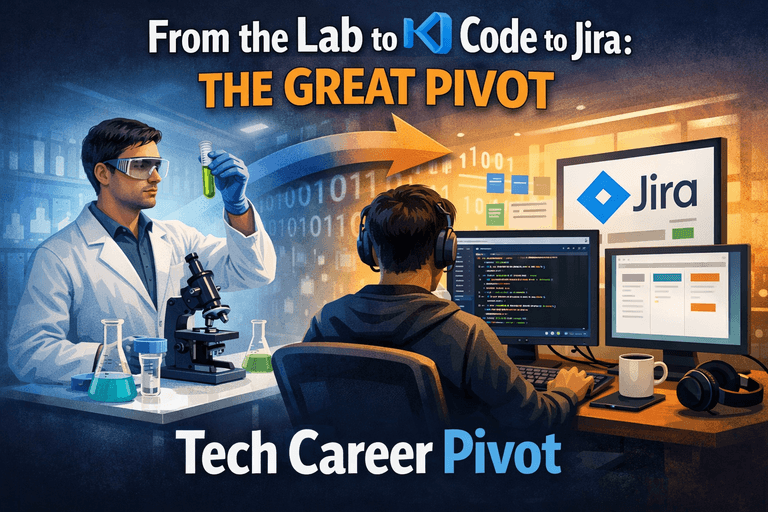
Career paths are never linear
First comes Winter, then spring
It was a dry November in 2017.
Harmattan had started showing its early signs through weekly snippets of cold, dusty air. I was standing at the student affairs office in LUTH wondering if I had settled for the wrong life. My first choice had been Medicine and Surgery. I did not meet the cutoff score. I ended up in the Medical Laboratory Science department instead, staring at a notice board, asking myself what exactly I was doing here.
The next six years would turn out to be the most instructive of my life.
But I did not know that yet.
What the Hospital Taught Me
The Nigerian health sector has a particular kind of brokenness. It does not fail all at once. It fails in small, accumulated ways that only become visible when you are inside it, either as a worker or as a patient. I was both.
During my internship at LUTH, my grandmother had a stroke and was admitted to the same hospital I worked in. The hospital I had come to understand and, in some ways, respect. Being on the other side of it, as a family member, not a staff member showed me things the lab coat had hidden from me.
Payment was a pilgrimage across the hospital. You moved from one counter to the next, each one a new hurdle, each one indifferent to the fact that someone you loved was lying in a bed somewhere in the building. Drugs were not available at the pharmacy. I had to go outside the hospital premises to source them from vendors on the street, with no reliable way to verify whether what I was buying was genuine.
I filed these experiences away. I did not yet have language for what they were showing me. I know now that I was watching a system fail the people it was supposed to serve.
I have been trying to do something about it since.
First bite at the cherry
During my service year I had more autonomy over my time and my money than I had ever had before. I used some of it to enroll at Altschool Africa, after coming across a post from Hack Sultan about scholarships for their software engineering program.
It was not a gentle introduction.
I finished work at the lab, got on the bus home, and logged in for a Wednesday evening class with Mr. Setemi while still in motion. I remember one thing he said in those early weeks, clearly enough that it still echoes: a lot of you will not finish this course with us.
I felt personally addressed. I was not participating. I was barely keeping up. But there was something in the specificity of what he described for those who finished. The kind of work they would be able to do, the problems they would be able to approach, that kept me in my seat.
The moment the program clicked into something real for me was SickleAid.
SickleAid: The First Attempt
SickleAid came out of Althub, Altschool’s final project initiative. The brief was to build something real. We built an app for sickle cell patients; the idea was an Uber-style emergency response system. A patient in crisis presses an SOS button. The nearest partnered ambulance is alerted. A call goes through immediately to guide the patient while help is on the way.
Ambitious. Yes. But the problem was not abstract to me.
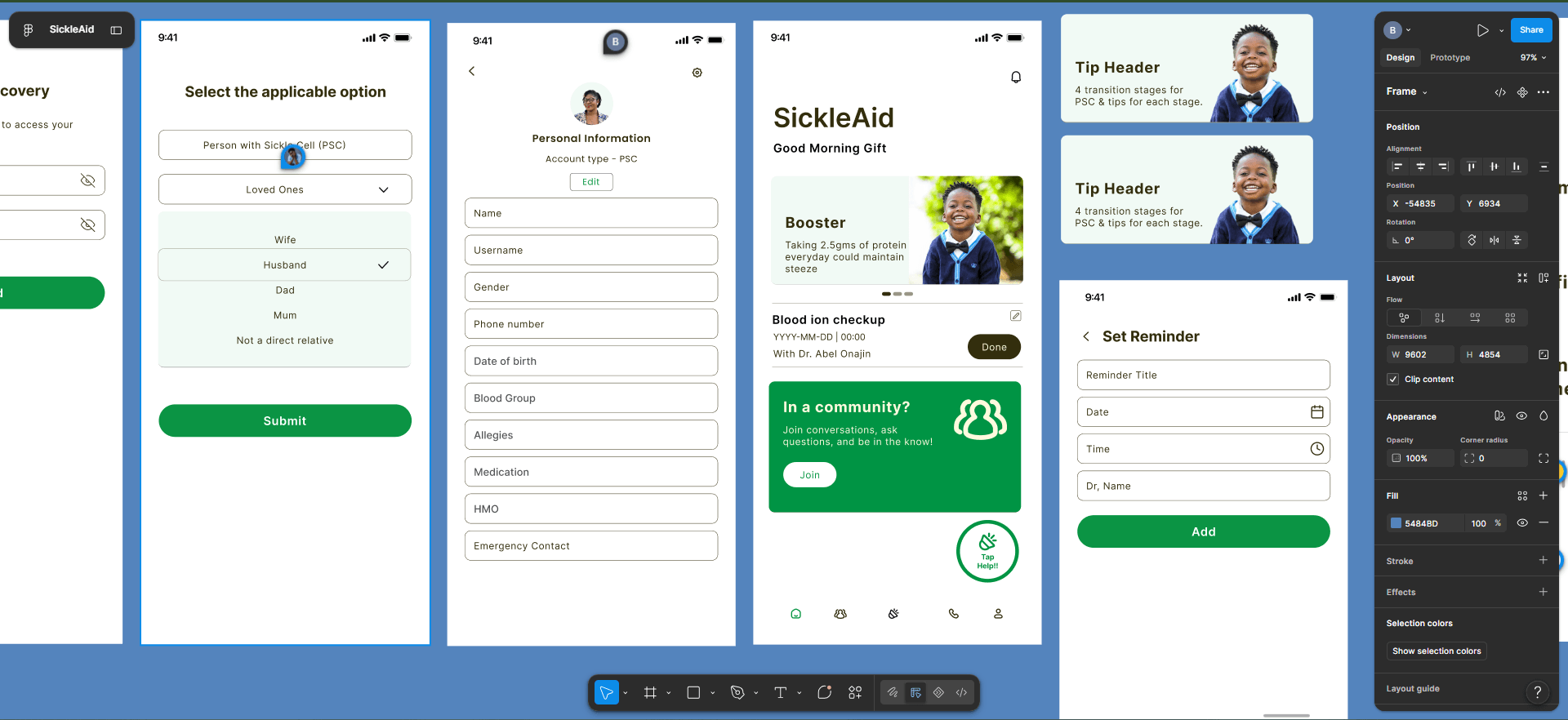
During my internship years, my flat mate had multiple sickle cell crises in a single year. Each time, when we were on a trip or at a party, we became stranded trying to figure out transport, trying to reach hospitals, trying to manage an emergency with no infrastructure to support us. The chaos of those nights is where the SickleAid idea actually came from. Not a brainstorm, a memory.
The project did not succeed in any commercial sense. But what it gave me was something I did not expect.
For the first time, I was doing user research, real conversations with real people about a real problem, not a textbook exercise. I was implementing a design produced by an actual design team that had consulted with me about what we needed. I was building with other people toward something that was supposed to work in the world. And somewhere in that process, I heard the words “product management” for the first time.
The next big chunk
In my house, you do not throw away food. Whatever you are given, you finish it. That is not just a rule about meals. It is a posture toward life. You take the bites available to you, and you see them through.
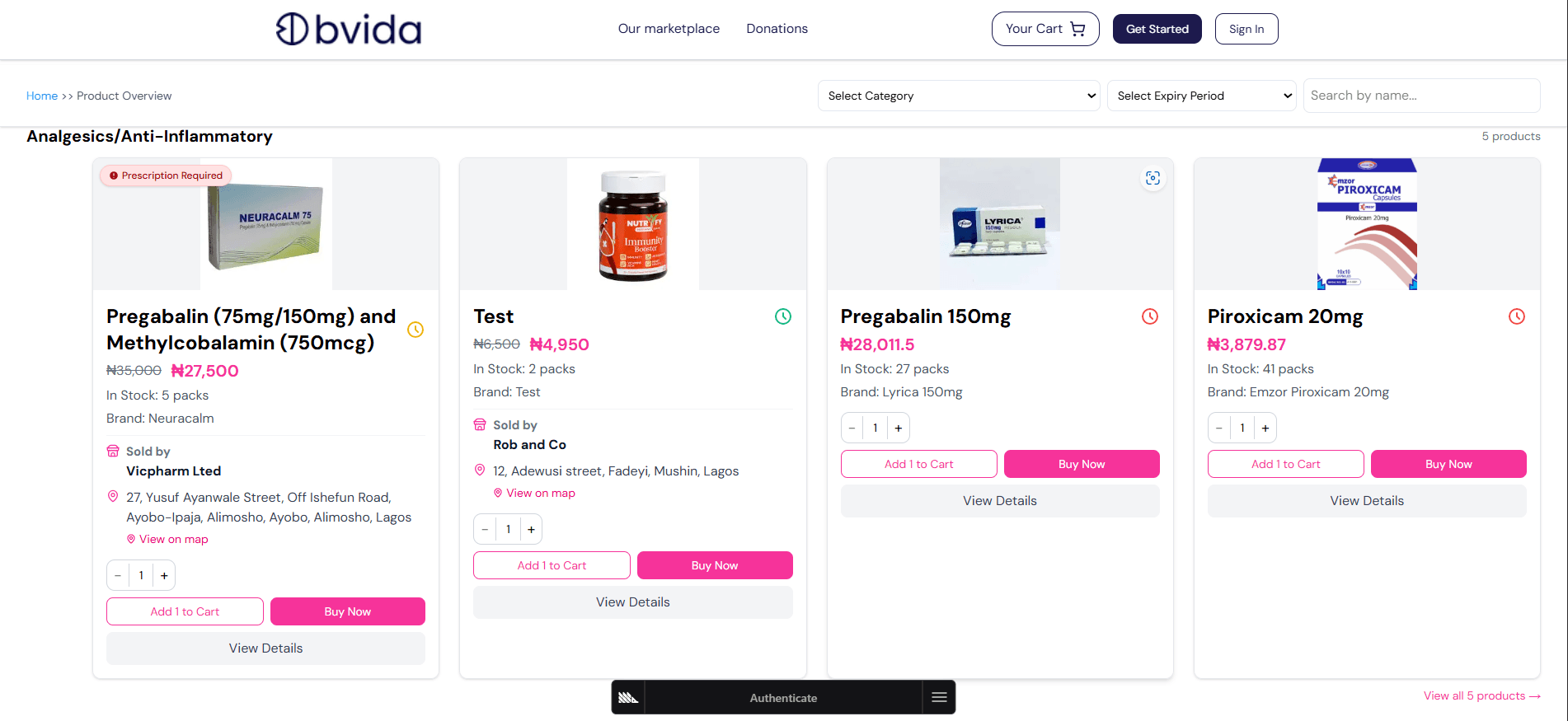
After Altschool, I made my first LinkedIn posts. A pharmacist I had worked alongside at LUTH saw them, noticed I had learned to code, and reached out. He was building a solution to the same drug authenticity and affordability problem I had navigated for my grandmother — the unverifiable drugs, the inaccessible prices, the broken supply chain between pharmacies and patients.
I almost said no. But I said yes out of instinct. I mean, "What was the worst that could happen".
What followed was the most concentrated period of growth I have experienced. I wore every hat available, from product manager to technical lead. I had to get comfortable with Next.js, Payload CMS and data infrastructures. I took courses from product school at night to keep pace with decisions I needed to make in the morning.
That company is Bvida. We are still building it.
Why Product Management?
The universe, I have come to believe, has been trying to tell you what you are suited for long before you have the vocabulary to hear it.
I led the constitutional amendment process for my department’s student body. I organized the annual internship seminars at LUTH. I ran blood drives for the hospital’s blood bank and managed stakeholders on behalf of the interns and vice versa. I conducted user interviews with patients before I knew the term “user research” existed, and prioritized events and tasks to be carried out.
I have always asked the same questions: why does this work this way? How does this decision affect the person it is supposed to serve? Are we building it because it is easier than confronting the real problem?
Those are product management questions. I was asking them in a hospital corridor in 2019.
The difference now is that I have a framework for acting on the answers, and products in the world that exist because I did.
Where This Goes
Currently, I am completing a master’s in public health at Ahmadu Bello University, Zaria, with research interests in digital health adoption and how technology actually reaches or fails to reach the populations who need it most.
I am building Bvida: an e-pharmacy connecting price-sensitive patients with short-dated medications that would otherwise be destroyed and connecting pharmacies with a way to recover value from inventory that the current system treats as waste.
And this blog here, my pocket universe as I call it, is me writing about what that building process actually looks like. The decisions, the tools, the things that did not work the first time, and the things that did.
If any of this intersects with what you are working on or thinking about, I would like to hear from you.
Next: the product case study that taught me more about structured PM thinking than six months of courses — and the calculation mistake I caught after I had already submitted.
Feel free to reach out to me on X (formerly twitter), LinkedIn and medium.
Visit Bvida to shop for your drugs from a licensed pharmacy near you

Is that a bird? a plane? No, its.....
Ibrahim introduces himself on his first post on the blog, he is a product manager who specializes in health and fintech start-ups. Have a fun ride!